Ronald Ernest Paul is a retired Libertarian-Republican politician who was born in Pennsylvania but did most of his politicking in Texas. He is notable for:
- A 619:1 ratio of failed to successful bills sponsored.
- Believing that the federal government should be responsible for as little as possible, and, accordingly, voting no on almost every measure.
- Receiving one electoral vote in the 2016 presidential election, despite not running in it.
- Writing some shitty books about gold.
Table of Contents
- 0: Prologue
- 1: Endless Fields of Ruin
- 1.1: Narrative Text
- 1.2: Narrative Image
- 2: Emissaries of the Funeral City
- 3: The Weirdest Blog You'll See This Week
- 4: Munistas θuvas Tameresca
- 5: Somewhere in Brazoria
- 6: We're in the Heart of the City
- Appendix: Image Sources
0: Prologue
Ron Paul Funeral City is a collection of Tumblr posts made between July 2012 and March 2014. Created in a time before the YouTube-analyst-industrial complex had fully matured, before the infrastructure had been created to support double digit hours of mulling and theorizing about anything even vaguely ARG-shaped, RPFC remained comfortably obscure. Some posts became cult hits — because Tumblr users love cult hits, and will turn anything into one at the slightest provocation — but others didn't reach much of an audience. Most RPFC posts, at the time of writing, have less than a thousand notes. Some have less than 50.
The combination of distributed narrative (multiple blog posts) and the function of a social media site (growth by exposure) means that the story of RPFC is rarely experienced in its entirety, start to finish. So, although you might be able to quote the catchphrase "Ron Paul Funeral City, 350 million dead" and get a few hoots from a certain audience, very few people could tell you what actually happens in this story.
To my knowledge, there have been two serious attempts to investigate Ron Paul Funeral City. The first was in 2012, by one Sarah Kasulke, whose article "Ron Paul's Funeral City is the weirdest blog you'll see this week" is... difficult to describe without condescension. It's very directed towards people who are internet casuals, unacclimated to the waters we swim in, for whom the ideas of real person fanfiction and niche fetish photoshop galleries are weird enough to look at with incredulity. Going by the Wayback dates, it's a kind of person who stopped existing, or at least stopped being marketable to, before the middle of the decade.
The second attempt is happening right now.
In the fall of 2020, a couple of friends and I fell into a RPFC obsession. We went through the blog with a fine-toothed comb, trying to find a backstory, sifting scraps of possibly-relevant information from wherever we could see. When we eventually tracked down a modern contact for the author, we emailed him some interview questions of our own. And we received a response.
The original plan was to make a video essay with this information, but we never followed through. I was 17 years old and currently in the process of failing out of community college; I wasn't ready. Which is to say, poetically, that the world wasn't ready. But now, approximately five years wiser, I am going to tell you about Ron Paul Funeral City, and I'm going to try to do it right.
The decision to do so is not without conflict, though. On one hand, I genuinely wish RPFC was a little better known — I just think it's a good story, straight up, and it would be nice if more people read and discussed it — and, yes, I think my analysis of it can provide something of ideological value to my audience. But, on the other hand, I acknowledge that its obscurity has to this point protected it from dying of exposure. These two hands are the scales on which I weigh the ethics of writing this essay in the first place. How do I explain Ron Paul Funeral City without killing it? What claim do I really have to a valid interpretation of the work beyond what Sarah Kasulke already wrote? I don't want to turn it into a parking lot. I feel morally compelled to protect it.
To this end, I have to beg you the reader to remember that this is what RPFC means to me. I investigate it for my own satisfaction. I make it make sense according to my own warped lens of understanding. It may, when viewed through yours, appear distorted; the nature of that distortion is important information as to the shape of your own lens, and you can learn from it. Keep that in mind as I tell you what RPFC is, what it's about, and why any of it matters at all.
Note: I have created my own unofficial RPFC archive in order to have a static reference document for this analysis. This is not the first of its kind, as one has been hosted on chitin.link, which is generally very good, but is missing a couple posts. It also doesn't have the second interview, because that's being published for the first time here. Within this essay, citation links like this go to RPFC posts on my local archive. I make liberal use of inline quotations wherever appropriate, so it should be possible to understand the essay without constantly referencing the archive, but readers who are not already extremely familiar with RPFC canon are encouraged to click on those links for additional context. Readers of any description are encouraged to check out chitin.link, because it is a cool website.
1: Endless Fields of Ruin
1.1: Narrative Text
This is the narrative of Ron Paul Funeral City:
Ron Paul, assisted by his son Rand, is going to bring the glory of the past back to the present. The cost of this great act is a sacrifice of three hundred and fifty million people. To this end, the Pauls are constructing a city dedicated to the mass sacrifice of humans and the subsequent interment of corpses. Various miracles occur to validate the righteousness of the funeral city. Eventually, the city is complete, and its citizens are left to await Ron Paul's signal to die. 200,000 men dedicated to the functionality of the city will not be sacrificed; the 350,000,000 who are will later be resurrected by Ron Paul's hand, and live forever in his remade world.
The blog tells this story in generally linear order: post number 5 is captioned "Preparations begin for the construction of Ron Paul's Funeral City," post number 33 concludes with "Citizens await their completion." In between, we are given vignettes of the city's rise, the lives of its inhabitants, the deeds and declarations of the Prophets Paul, and the miracles surrounding them.
Fig. 1 — Miraculous Feats of the Funeral City
| post | attribution | description |
| 6 | natural | "1000 meter wide blackbird egg" is presumably laid by a giant blackbird |
| 10 | natural | "Animals gather," building-like structures emerge from the earth |
| 13 | unexplained | Waterfalls appear from banking towers and submerge cities in "millions of liters of incredibly clean water" |
| 14 | choir of children | Birds emerge from the decks of boats, fall lifeless when singing stops, are revived when it resumes |
| 16 | natural | "Handball sized and melon colored nodules bloom on the bodies of the faithful," grain flows from human bodies |
| 20 | Rand Paul | "Overnight, the bedside water-tumblers of Rand Paul's network of friends spontaneously generate singular flawless calves' eyes" |
| 20 | Rand Paul | A "large carp" swims into Rand Paul's bedroom and speaks to him; Rand slaughters it and observes "The guts [...] formed a sign — the split staff of wheat" |
| 20 | the blog | "This post was [...] submerged in a well for 3 days, on the 4th day it returned to dry land without any mortal intervention" |
| 26 | Rand Paul | Rand Paul's cowboy hat makes "bone cracking and tree felling sounds that somehow fill closed spaces and continue after he disappears over the horizon" |
Despite the validation of these miracles, the construction of the City is not unopposed. In post number 8, the Republican Party erects a cordon sanitaire around the burgeoning city — the "sanitary cordon," to note, originally referred to a blockade to enforce quarantine, and then evolved euphemistically to mean a refusal to engage with extremist politics — and also attempts to stop incoming "tomb trains" with explosives. In post number 24, the Funeral City capitulates to the "desperate calls" of the United Nations to "integrate with established international bodies." Even the anonymous asker of post number 25 attempts to shout down the City: "hurricanes would destroy it in minutes."
Yet, ultimately, the City appears to have more supporters than detractors. It is trumpeted and cheered, sung to by a choir of children dressed as angels and by two hundred thousand blessed-doomed men, and in post number 23 an onymous (though now long inactive) user asks what they can do to "work to undermine and deny the false adjurations of those who speak against the glory of the Funeral City." The 350,000,000 sacrifices are willing and grateful, the world itself aching and adoring.
SK: When will this sacrifice happen? Does RP have 350 million followers ready to be sacrificed, or will there be some unwilling?
RPFC: [...] Does the moon rise from the underworld each night, does the sun rise on the breath of God? Are there 350,000,000 people who don't want eternal life in a remade world?
The story ends on post 33, the citizens left awaiting their completion forever. There is no definite conclusion. Ron Paul Funeral City is, counting generously, about 3,400 words long, which is on the briefer end of a taxonomically-defined "short story;" but the narrative is not held up by those 3,400 words alone.
1.2: Narrative Image
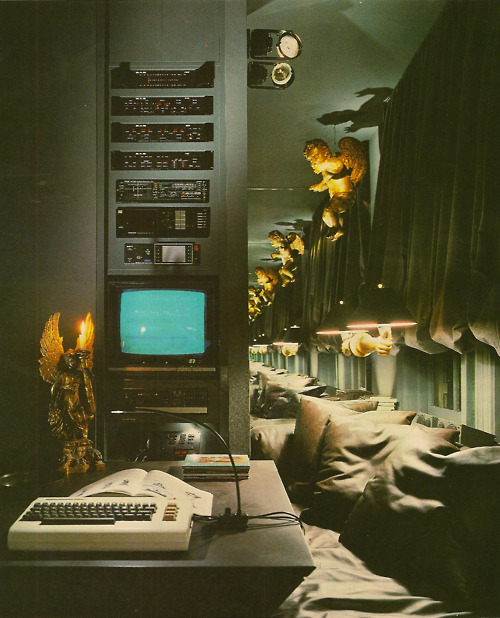
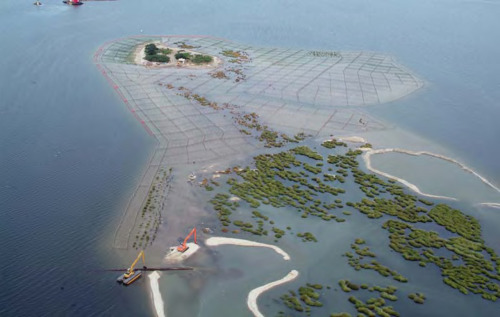
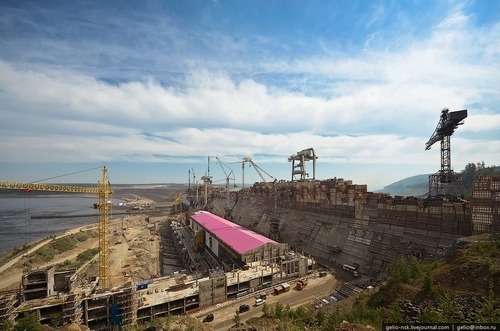
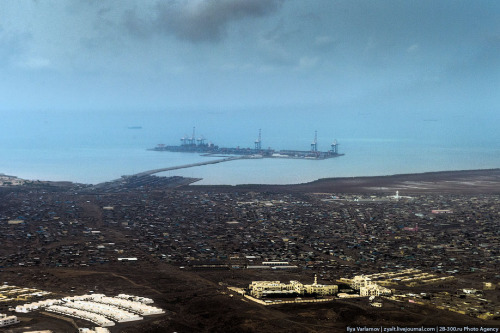
Most Ron Paul Funeral City posts are accompanied by images. Sometimes the images are directly commented on by the text, sometimes they are tangentially relevant, sometimes they are random. High fashion is juxtaposed with scenes of military-industrial desolation, or with completely ordinary places. The pictures are small, compressed, watermarked, scanned from magazines, sometimes have a baked-in drop shadow — they are clearly sourced from elsewhere, and reappropriated in RPFC's service.
These images could be scrutinized for hidden meaning; I will in fact do so, later on in this essay, in order to extrapolate some relevant symbolism from their original contexts. This is not necessary to understand the story, though, and I only do it for the sake of this essay's own narrative. The sources are arbitrary. The purpose of the images, as they are presented in the canon, is as illustrations to reinforce the themes of the work as a whole: Ron Paul Funeral City is a story about violence and ruination done in the name of a beautiful vision.
RPFC talks about destruction in the language of creation. Things are often described as beautiful and perfect, the Pauls' acolytes are joyful. The Funeral City, the death of hundreds of millions of people, is desirable, aspirational, and intelligent. The reader is never encouraged to try to separate the beautiful from the functional. Photos which were clearly taken with aesthetic intent are joined to those taken without, demanding congruence. To advertise, appeal, decorate; to document, demonstrate, inform; they are the same. The story barrels over the dissonance and forces the audience to accept it as a single object. There is no "necessary evil" in the Funeral City. To wash the world in blood is so self-evidently right that it doesn't even need to be justified.
It would be naïve to act like the images RPFC uses to represent beauty are themselves self-evident or politically neutral. The high fashion models are all white, all women, usually blonde. The narrative effect is clear: for all its references to ancient Mesopotamia, RPFC's world is an American world; and it says America, agent of destruction, is thin, pale, and wearing makeup.
Is this a consequence of larger societal forces pummeling the fashion industry into a specific shape? Yeah, probably. A lot of models are thin blonde women, for reasons Ron Paul Funeral City has no control over. Not all of them, though. And RPFC does have control — exclusive, indiscriminate control, even — over which images it uses. The ubiquity of thin blonde women here is not natural.
It's nebulous who exactly is most condemned by this depiction, the destroyers or the implied destroyed; if beauty is so specifically formed, then everything not of that form is sent underfoot, as the ugly, the unclean, the wrong. But RPFC, as a work of fiction, puts us in a magic circle where beauty and righteousness are also violent and blatantly destructive. Ugliness and wrongness, therefore, are logically on the side of nonviolence and peace. Reflected back out of the magic circle and into reality, where we tend to prefer peace over ritual slaughter, ugliness ("ugliness") becomes good, actually. When we are no longer being urged to take the side of the destroyers, we easily condemn them. Is it progressive of RPFC to say, wink and nudge, that the standards of high fashion are destructive and a threat to the continued survival of society? Follow-up question: would it have been more progressive to include non-white and non-thin people in the image of beauty, or less? Another: does this even mean anything to a real world that has already so thoroughly romanticized the entanglement of beauty and destruction, beauty and death, that the audience doesn't think twice about their association, even in the twisted mirror of alternate reality fiction?
Ron Paul Funeral City is a story about the grotesque pain of pursuing beauty. Of sorts — political pain, political beauty. It shows a society which is purified by the bloody extraction of its vital components; any narrative that even glances at the subjects of plastic surgery or eating disorders does the same, except in RPFC the trick is that the purification actually works. It's all real, and the story remains enthusiastic to the end. Reading about a body that shaves itself down to fit an impossible mold is simultaneously tragic and terrifying — the proportions vary by genre and factuality, but always a little bit of both. The gladder the narrator is about the shaving, the more terror is stirred into the solution. Expanding the body to the millions-of-bodies makes both the tragedy and the terror broader, less tightly concentrated, but more resistant to the immune defenses of an adult mind that's mostly learned how to cope with individual-sized doses. (What do you do if something bad happens to you? What do you do if something bad happens to everyone? Two very different lines of questioning.)
What makes RPFC so interesting is that it neutralizes its inherent tragedy with the antagonist drug of absurdity. The kilometer-wide blackbird egg, the inherent funniness of large numbers (350,000,000 people, 600,000,000 cubic meters of land), the crusty nonsequitur images, just the fact that it's a story about notable failpolitician Ronald Paul and his failpoliticianson Rand Paul — the terror becomes terrific. Ron Paul is a clown, or better yet, a guy in a rubber monster suit: conceptually capable of being scary but currently squeaky-shoed and fangless. The idea that three hundred and fifty million people could be slaughtered — even willingly! — for idyl political purposes is horrifying. We laugh at the idea that Ron Paul could do it.
But who could, if not him? Who would we rather sacrifice ourselves to? Whose Funeral City do we actually want to build?
2: Emissaries of the Funeral City
The story of Ron Paul Funeral City, within itself, is told by multiple people. Post number 4 is an anonymous ask, "Who runs this blog?," answered by ronpaulfuneral city with
A gang of straight people, a white man, a black man, a latino man, all races, all men, all straight. Thank you for asking
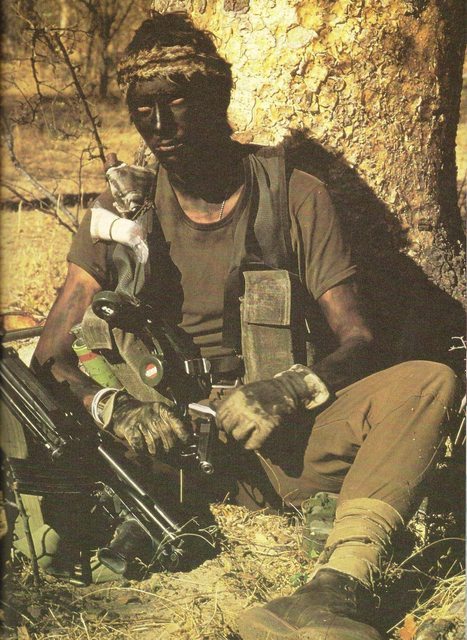
and a picture of a South African Defense Force soldier, tenuously identified as Peter Williams of the 32 Battalion.
When Kasulke reached out to ronpaulfuneralcity in September 2012, she asked the interviewee for their "name and profession," to which RPFC responded
My name is Poldo Destoufier-Whep, I work in commodities at an investment bank. Thank you for your wonder about Ron Paul's Funeral City, 350,000,000 dead.
Post number 12, made a week later, identifies Poldo Destoufier-Whep as "a Ron Paul Funeral City media representative" (and Kasulke "a busybody journalist.") We can assume that Destoufier-Whep is only one of the "gang of straight people" in charge of the blog.
Post 12 only publishes RPFC's side of the interview, but it contains a link to the Ithacan article. This, by my measure, makes Kasulke a contributing author; so too are tumblr users bubblebathosbands, wernerwartzhog, uglysowwithhumanface, and the four anonymous askers who also appear on ronpaulfuneralcity (in posts 4, 19, 22, and 25.)
Authorship is further complicated by the existence of "guest posts," of which there are three, published by the same ronpaulfuneralcity account but signed off with a credit to a guest author.
Fig. 2 — Guest Authors
| post | attribution |
| 20 | "by Dylan Ingraham, edited by a rpfc media representative" |
| 21 | "by Félix Labillois, edited by Ron Paul Funeral City media representative" |
| 29 | "by Vern" |
The smallest number of possible identifiable contributors to RPFC is nine: if Poldo Destoufier-Whep is the sole author of all non-guest posts, and all four anons were actually one person, plus three guests and three askers, and Sarah Kasulke. If, however, the other straight men who run the blog wrote posts of their own, and all four anons were different people, the number goes up to fifteen. Even more if there are additional straight men representing other races who were not mentioned in post number 4.
These contributors have varying levels of narrative internality. Poldo Destoufier-Whep is not confirmed to exist outside of RPFC; Sarah Kasulke is a real person of whom photographic and video evidence exists, although I've never met her myself. We will eventually have to reckon with this idea of internal and external authors in more depth, but until then, I have prepared a colorful diagram for your viewing pleasure:
Fig. 3 — Authorship Diagram
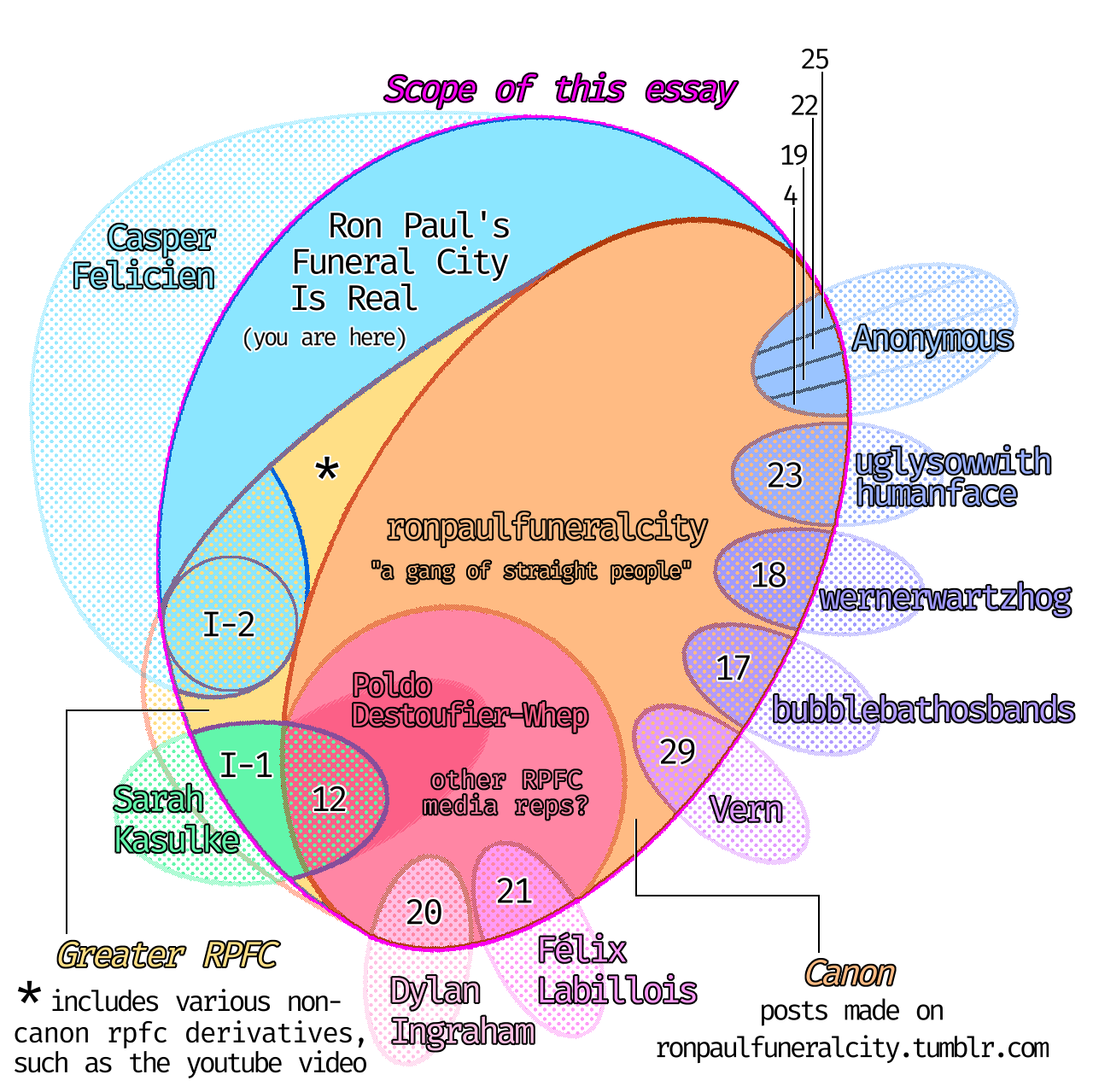
this makes the petscop one look downright quaint
(Please note that the relative sizes of these chart-objects are arbitrary and subject only to the rules of what things can fit inside other things. I do not mean to imply that any author's existence is "bigger" or "smaller" than any other.)
I'm serious when I say that this is just a preliminary map of concepts that will get even more complicated in the near future. The best way to explain it is just to tell you to get familiar with this picture, and pay attention to how it changes when I give you additional information later.
What's most relevant for right now is that we can see how posts number 20 and 21 intersect with the media representative subset of RPFC authorship, and post number 29. 29 is written in a very different style than other posts, and is one of only two to use first person perspective, describing a woman of the Funeral City alongside "ourselves." The flagrant poeticism of this piece invites investigation, and in a different kind of story, we might well benefit from trying to figure out exactly what the "printed orange slip of high-density polyethylene" is; like the images, though, I think the pursuit of literal secrets is less important here than the thematic meanings presented on the face. Post number 29 is a reinforcement of the RPFC aesthetic through vocabulary and structure: vivid language, beautiful; bulletpoint lists, functional.
The other first person post, number 27, is also structually unusual. It's long, it includes spoken dialogue, an en dash, a grammatical error that obscures meaning. It tells of an interaction between the author and Rand Paul himself, and ends with the author's survival in question; rationally, the author must have survived to write the post at all, but post number 20 has already shown that "blog posts" in the world of RPFC do not necessarily work like we expect them to. If a post can be submerged in a well and then return "without any mortal intervention," it may be possible for a post to be written and published in a way that does not require its author to be alive.
RPFC is not an epistolary, after all; the majority of the story is delivered as detached third-person descriptions, absolute truths witnessed by no one in particular. If it was published as a singular text, this would not be noteworthy. It is the medium of the blog that makes it unusual.
3: The Weirdest Blog You'll See This Week
Blogs are highly personal and highly relatable. They are written by ordinary people, people who are "like us" in a way that published ink-and-paper authors just aren't. A lot more people have written blogs than have written books; I'll even make an unwarrantedly-confident guess that, if you measured out the total number of blogs written in the past 20 years, it would take many more years to produce a comparable number of physical diaries. Like a hundred or something. Consequently, when reading a blog, there is an implicit empathy between reader and author. The reader assumes the author is "like them," and this feeling extends beyond just the probability that they've both written blogs. They assume the author is a normal, reasonable, individual person, and the content of the blog is a narration of or at least relevant to their own life. This empathy is broken, to effect, when the author starts describing a reality that does not seem to exist.
The history of distributed narrative on the internet begins with whichever story first drew your attention to it; failing that, it starts somewhere around the dawn of time. This is to say that it has always existed, and it has always been new and weird.
Distributed narratives are stories which are told in disparate pieces across time and space. Unlike a page in a book or a song on a record, which have their parts literally bound together into a single object, a distributed narrative's parts are connected only by ideas and intention. The internet allows for a middle ground by "containing" distributed parts in the "object" of a website, especially a social media account, which is a sort of semipermeable barrier encircling a story. Mother Horse Eyes, for example, is made of a lot of little parts, but they are almost all within the boundaries of reddit.com, and more specifically reddit.com/user/_9MOTHER9HORSE9EYES9/. Put together, it can be read as basically a big block of text. Ron Paul Funeral City is likewise almost all on tumblr.com, specifically ronpaulfuneralcity.tumblr.com, and can be assembled into a block entity. (As I did for this essay.) There is, however, a distinction to be made between how Reddit and Tumblr handle the circulation of their media in vivo.
A distributed narrative of Tumblr posts is capable of being disseminated much more widely across the site than one of Reddit comments. The share button on a Reddit comment only prompts the user to copy a link and forward it to some other domain; comments aren't treated as content in and of themselves and can't be crossposted between subreddits. On Tumblr, though, posts can be reblogged and spread throughout a web of people rather than topics. If a post isn't tagged with something well-established, like the name of a fandom or whatever that a person might actually search for, the only way for someone to see it is through happenstance — someone they follow, or at least someone the algorithm thinks they should follow, reblogging it.
The parts of a story that are most likely to be reblogged are the ones that are the funniest or most sensational out of context, to appeal to the most people and best take advantage of snowballing growth that can carry it to distant audiences. In this way, readers find small fragments of a story washed up on their local shores, and may not even realize that they came from something larger. People don't usually bother investigating the original source of everything they reblog. If a post doesn't have a straight up "next installment" link at the bottom, it's probably going to be taken and treated as an individual entity. The typical Tumblr experience is less like reading a magazine, which is my best Reddit allegory, and more like having a list of interesting telephone poles you can walk around and see what's stapled to. One doesn't normally consider that a poster on a telephone pole might be part of a series, not even when they're making a photocopy of it to put up on their own pole. It doesn't help that they might not even know it's a possibility.
Distributed narratives, like hyperfiction and cybertext, are eternally avant-garde. They are heralds of strange new frontiers, but the rest of the garde never seems to arrive, and the frontier remains inhospitable (read unprofitable) despite the ease of sharing stuff on the internet. A significant part of this is because niche narrative structure is so entwined with niche narrative content that it's just harder for something distributed to have broad appeal.
Popular media, the kind you can buy in a store, remains extremely linear; video games are the exception, but many high-budget games-as-products have strict stories that are dictated to the player through a straight sequence of interactive segments, or else have only a vestigial story and prefer to focus entirely on gameplay as tactile entertainment. Nonlinear stories in other mediums, like books, are generally novelties intended for children: see Choose Your Own Adventure and its various alikes, or the graphic novel Meanwhile. Grown-up texts like Hopscotch, Pale Fire, and House of Leaves are lauded by us strange artistic types, but the fact remains that most people who buy books do not actually want to buy the book-as-narrative-format; they want to buy the story, which just happens to be inside a book right now. It's, in fact, the implicit goal of a lot of published popular literature to get the story turned into an audiobook or a movie or a TV show. The "book" is purely functional.
There is no profit motive to make books that push the limits of what a book can be, as long as the books that are just lists of words are still selling, still getting turned into audiobooks and movies et cetera. The people who tell distributed narratives are, almost as a rule, not doing it to make money; like the people who write books that can only be books, they're doing it because they have a story that can take advantage of the unique properties of the medium: nonlinearity, nonattachment, noncertainty.
It should not escape our notice that fictional distributed narratives are often inspired by, or at least bear similarities to, real world phenomena like the Schuylkill Notes, Toynbee Tiles, or Bob Hickman's car. Online, it's even easier to find examples of people telling a story in disparate pieces across time and space because that's the only means they have to do it. Here again is the accessibility of the blog, the Reddit comment, the YouTube channel. Fiction told through these mediums claims verisimilitude from the existence of non-fictional examples of people acting strangely or sensationally on the internet. Said fiction indulges the fantasy that there is an ultimate truth to be decoded from these messages, and that their authors may be vindicated as part of a larger story; I don't think this is a problem, as long as that story is told well enough. I resent the exploitation of weirdness for the benefit of normality. But that's something to talk about another time.
The fact remains that experimental forms of storytelling are implicitly pro-weirdo. It would be difficult, and more importantly pointless, to tell a story about a career-focused woman from the big city who goes to a small town to fall in love with a humble family man through a medium of coded messages and fake VHS tapes. (Well, now that I say that, it probably would be interesting as a deconstruction of the relentlessly heterosexual and tropey romance genre — ANOTHER TIME.) The farther an author ventures from traditional media formats, the more they can trust their audience to be on board with things that are strange, unconventional, possibly nonsensical. A distributed narrative is a litmus test for the reader's weirdness tolerance. See, in contrast, any movie that bases itself in strangeness/unconvention/nonsense: it is no more difficult to watch a weird movie than a normal movie, weird movies are often presented in similar ways as normal movies, and so they get watched by people who don't actually want or like weird things, and then are chewed dry by shallow criticism. The "ending explained" video is the bone-eating vulture of media analysis, except way less cool than actual bone-eating vultures.
But it's harder for someone who doesn't like weirdness to get to the end of a story that's told in a weird medium. Distributed narratives have easy bailout points: just don't go to the next part. If it takes effort to get to the next part of a story, (and even small efforts add up here), it's difficult for someone to thoughtlessly make their way to the end, plodding to the finish line without understanding what they just went through. Not impossible — there was a lot less of Ron Paul Funeral City to be read when Kasulke's article was posted, but she still scrolled through it all and yet eminently didn't get it, even when writing about it for her college's student newspaper — not even as unlikely as I might dearly hope, having seen far too many fucking youtube ossifrages coughing up the powderized bones of everything I ever loved — but definitely harder. Those who write distributed narratives, I think, are generally aware of this. These stories are written with the intention of staying underground, out of the burning light that demands thorough explanation to uncaring masses.
So why even try? Why explain something that naturally resists explanation? Ron Paul Funeral City doesn't need to be explained, and nobody needs to understand it, not even if they want to read it and enjoy the prose and collection of images. I know what it feels like to have a personal mystery, something no one else cares about as much as you do, and to feel like you have to solve it in order to get closure — RPFC isn't that, not entirely. It sort of became so once I got the second interview and suddenly had information no one else did, but from the start, I wasn't trying to track down the author because I thought doing so would "solve" anything. I didn't want the story to suddenly make sense. I just wanted to know as much as I could about it.
The second half of this essay is the result of that fervent desire for pure voluminous knowledge. This is why Ron Paul Funeral City matters to me: because investigating it made me think about other things in interesting and enlightening ways.
Jigsaw puzzles are often cut from the same die; pieces of different pictures can be transplanted into each other. Viewing reality in the same way — where information can attach to other information to reveal something you couldn't see from looking at the individual pieces out of context — is a good way to make sense of the world we live in, which is a lot of random pieces and nothing on the box. Meaning and mattering are emergent properties based on if a handful of pieces make a cool shape when put together. If this is nonsense to you, if you just want to make a picture of a photogenic horse, if you think nothing about Ron Paul Funeral City could possibly apply to actual politics, that's fine; take my opinions as preposterous negative space that defines the things that make sense to you. Feel free to read the next section, "solve the mystery," and then dip. It was good to have you.
4: Munistas θuvas Tameresca (guardian of the funeral chamber)
Ron Paul Funeral City was not always what it is.
If you scroll back to before post number 1, you will find 631 more posts, with many of the same themes as those of the actual narrative. Fashion, military, transportation, concrete. Reblog chains and the Wayback Machine will show that those 631 posts were made by the url tetradugenica until about May 2012, and then by tetradugenica-je-srbija until July 5, 2012. Searching the internet at large for "tetradugenica" will show you a consistent internet presence for one Leo Lafountain-Sherer. When I first involved myself with the RPFC investigation, Twitter was still a functional website, and so that was where I reached out; tetradugenica responded, confirmed he was the author of Ron Paul Funeral City, and gave a second interview, eight years after the first.
The Second Interview is, of course, included in the unofficial archive I've been linking to throughout this article, but for the sake of completeness, here it is in full:
CF: Why did you turn a seemingly normal tumblr blog into RPFC?
RPFC: One day, “Ron Paul Funeral City, 350,000,000 dead” rang in my head. I could picture everything about it, the buildings, the master plan, the people, the colors, everything. So I wrote some stories and included images to help other people understand what this Massive Funerary City would be, as it was born from the land.
I had no idea how much people liked it at the time, I heard it, wrote it. Once some citizens asked me for interviews I realized that they understood that soon to emerge from the tidal flats was a necropolis for all 350,000,000 US citizens who would go there to die willingly in a mass sacrifice for Ron Paul and his dynasty. I'm glad that people still enjoy it.
CF: Why did RPFC stop updating? Is the story "over" or was there another reason you stopped posting?
RPFC: There was no need to keep going, it's essentially come to pass, we're in the heart of the city.
CF: How seriously did you take RPFC? Did you make it as a joke, or as a serious story? Did you expect people to react to it in a specific way?
RPFC: It's real.
CF: Is RPFC connected to any other piece of fiction on the internet?
RPFC: Only other things I've written, which you can find here. It's all real, and it's all really happening.
CF: Did you make the ron paul funeral city youtube video?
RPFC: I didn't make that youtube video, while I appreciate that someone liked the city enough, the tone is wrong. I'd add a more sonorous funerary chant, because it's about an incomprehensible necropolis.
CF: Who made the "guest posts"?
RPFC: Guest writers, my associates Marc and Evan. Evan is on twitter @wash_cloth, a genius who's written lots of great things. Marc is a business man and lives a private life of humble service.
CF: Do you have any plans to make something like RPFC again?
RPFC: Yes.
(I would phrase some of these questions differently, were I to ask them for the first time now. Forgive the naïveté of my teenage self.)
But here's the dramatic reveal: the guest authors, Dylan Ingraham and Félix Labillois and Vern, were "actually" Marc and Evan. Lafountain-Sherer did not say which posts were which, although Ada of the aforementioned chitin.link has linked Vern to @wash_cloth, and I have no real reason to doubt their due diligence. With this information in mind, I present to you the second order authorship diagram:
Fig. 4 — Authorship Diagram-2
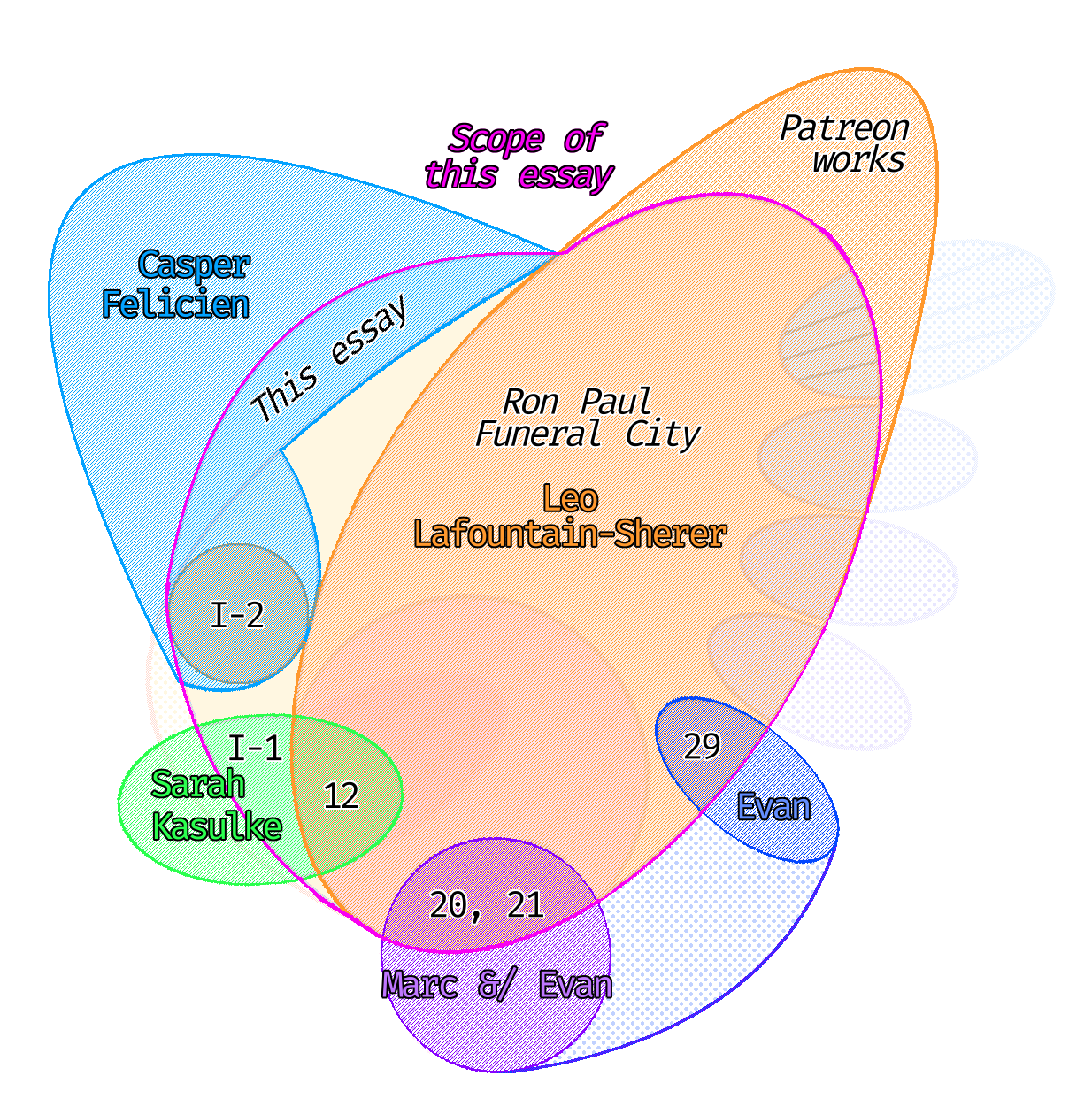
Lafountain-Sherer, Kasulke, Evan, and Marc are the four most important contributors to the RPFC narrative; three of them are verifiably "real people." I include myself for the sake of Interview 2, which is a post-canon authorial interaction with Lafountain-Sherer but not part of the ronpaulfuneralcity blog.
In that interview, Lafountain-Sherer also mentions his other works. These are hosted, as far as I know, exclusively on Patreon, which means only some of them are available without paying the toll. (Which you should, if you like RPFC and are financially able.) In order to not die of exhaustion in the process of finishing this essay, I will not launch into a complete examination of the entire extended tetradugenica universe; it's enough to know that these stories are just as real as Ron Paul Funeral City.
5: Somewhere in Brazoria
The place now known as Pearl Harbor has at least two Hawaiʻian names: Puʻuloa, "long hill," and Wai Momi, "waters of pearl."
Wikipedia allots one paragraph to the pre-American history of Puʻuloa-or-Wai-Momi. In legend, this is where the goddess Kaʻahupahau protected the people from man-eating sharks and man-abusing kings alike. The high chief Keaunui may have dug a channel to make the lagoon more accessible to boats in the 10th or 11th century CE, or he may have taken credit for a natural landscape feature, or he may not have done anything at all; it's hard to find out. The only citation in this section is to a page on the US National Parks Service website, whose own paragraph on Wai Momi concludes with this incredibly dismal sentence:
Just as the ancient Hawaiians valued Wai Momi, the United States today honors Pearl Harbor as a site of both cultural and military significance.
Some eight hundred years after Keaunui may or may not have engineered the channel to make Wai Momi more navigable by waʻa, the United States' own naval engineers destroyed the surrounding coral reefs to make room for their battleships. At last, someone had recognized the potential importance of this place, which for a thousand years had just been sitting there providing food and valuable goods to the native people, when it could have been used as a parking lot for gunboats to menace other countries with!
The "honored cultural history" of Pearl Harbor, of course, has nothing to do with Kaʻahupahau or Keaunui, the sailing of waʻa or the use of nacreous shells (pā) to make fishing lures; it is about getting bombed by the Japanese. "Pearl Harbor" refers more often to the attack than to the place itself, putting it on the same shelf as "Waco," "Columbine," places of shock and terror forever condemned to their cursed names. "Pearl Harbor" is the deaths of 2,400 Americans. "Pearl Harbor" is justification for the deaths of 200,000 Japanese. "Pearl Harbor" is shrugging off the deaths of as many as 500,000 native Hawaiians during colonization, because nobody bothered to count.
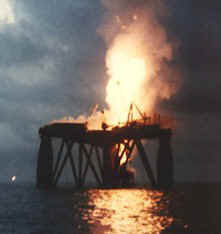
In 2006 — sixty-five years after Pearl Harbor, thirteen after Waco, seven after Columbine, one hundred and eight after the annexation of Hawaiʻi — the MV Blue Marlin carried the Military Defense Agency's sea-based X-band radar to Pearl-Harbor-the-place for repairs. The SBX-1 is mounted to a repurposed oil platform and normally moves on its own, but is frequently transported between Alaska and Hawaiʻi as needed for maintenance. It exists to track North Korean missiles. It is not, and never has been, an impossibly large blackbird egg.

Ron Paul is actually pretty anti-war, because wars cost money, and the goal of libertarianism is for the government to never spend a single goddamn cent on anything except maybe website hosting and lunch. He did, in 2001, vote for the resolution that authorized the use of military force "against those responsible for the recent attacks launched against the United States" — those attacks being 9/11, the incident so nationally shocking and terrible it claims not a place but an entire date. After several years of wanton use of force against, uh, whoever, Ron Paul did speak out in disapproval of the war in Afghanistan; he described it as being (first) expensive, (second) bloody, and (third) futile. On another occasion, regarding the Korean War in retrospect, he said quite succinctly:
Human tragedy aside, we have spent half a century and more than one trillion of today's dollars in Korea. What do we have to show for it?
War, to the libertarian conservative, is a transaction that buys dead foreigners with taxpayer dollars. Ron Paul, at least, thinks those dead foreigners should be worth something to the people who paid for them, and through this bizarre equation somehow manages to arrive at the correct answer (WAR IS BAD.) He does support national defense, the idea that the United States should have as many weapons as needed to deter a Pearl Harbor II Deluxe within its own borders, as long as they don't cost too much money. I don't know if he thinks the SBX-1 specifically is worth the (estimated) three bajillion dollars it costs to shuttle it back and forth from Alaska to Hawaiʻi every couple years. Perhaps the sunk cost it represents would make it a worthy sacrifice at the consecration of his Funeral City.
Ron Paul's ideology, after all, calls for a retrieval of the past: the single supreme law of the Constitution, the just and simple war of self-preservation, the money you can hold in your hand and bury in your yard, the world that is fair to the point of apathy. A time-place that makes sense enough for one guy to understand every part of it completely. A city encircled. A hundred mile cordon between what matters and what doesn't.
This world has never existed, certainly not in America, but it has an implicit sense of beforeness anyway. If it did exist, it would surely be somewhere behind us. Ron Paul wants the world of now to be one that could have been built five thousand years ago: the shape of antiquity, where we can imagine everything to be perfect and all the problems solved because the people who would tell us otherwise are dead — only made of modern materials, because mud bricks suck.
Reality does not allow for such a panchrest. A concrete Ur cannot exist. America is built from steel and polyester and air conditioning and coffee and battleships because the empire makes the things that make the empire that makes the things. The United States' definitional canal, which naturally exists in a strategically advantageous foreign country, was built as much by political interference in South America as by steam-powered excavators. Ron Paul dreams of a world where the advancement that made the latter is not so tumorously enmeshed with the complication that made the former — where there could be coffee without the constant international exchange of aid and extortion, or battleships without waterways they can navigate through. Where the things people want just show up without a word from the government.
The real Ronald Ernest Paul believed that America the empire could be ticked back measure by measure, dismantled by the same politics that built it, and reformed; Ron Paul of the Funeral City recognized that only absolute destruction would allow it. The deaths of 350,000,000 Americans, the erasure of their government, the devaluation of the dollar to zero, were the price to purchase that new reality.
Did he succeed?
6: We're in the Heart of the City
We did not see Ron Paul's Funeral City emerge from the tidal flats; the tomb trains did not muscle Amtrak off the United States' decaying railroad infrastructure; three hundred and fifty million people did not die. But that doesn't mean it didn't happen.
Fiction, in general, is the compression of human history, which allows people to consume thousands of years of ideas at once. The future contains large amounts of the past — not necessarily an accurate past, of course, but a bulk of material representing a general interpretation thereof. Any future moment, cross-sectioned, is mostly just past with a thin layer of future laid on top. In fact, the future gets less and less proportionally futuristic every time it happens; barring massive acts of devastation, history is append-only, meaning the amount of past never gets any smaller. And the more past there is, the more the future resembles it.
The future is actually really easy to predict: it will be mostly like the present, but slightly more complicated.
Authors of future-predicting fiction have an additional trick of knowing that the future will also contain the work they are currently writing. Fictions that are widely read are more likely to influence reality, but almost everything that exists now will continue to exist, even in very small amounts, in the matrix of the future past. People will make decisions informed by their agreement or disagreement with the fiction en route to whatever year it takes place in. The year 1984 would have been different if George Orwell had never written Nineteen Eighty-Four; this is impossible to prove, pending invention of the time machine, but understandably true.
The function of satire in particular is to be refused, and yet the future continues to look more and more like the satires of the past, because everything that is refused is counter-refused by someone else. Nineteen Eighty-Four was (as you may have heard) "not an instruction manual," but Orwell's visions of the dystopian 1980s were nonetheless eaten and digested and used to grow the reality of the 2020s, as people rallied against surveillance and surveillance corporations in turn rallied against anti-surveillance sentiment. Nineteen Eighty-Four did, in fact, instruct those in the business of surveillance and control with examples of exactly what they couldn't get away with, so they didn't waste time trying, and now Flock Safety is worth seven billion dollars.
Nineteen Eighty-Four is a novel famous enough to be trite, and required reading in a lot of public school curriculums. (I read it. I wrote a short essay about the symbolic role of teeth in the narrative. I have considered writing a much longer one about Newspeak.) It's also relatively grounded, based on technological innovations that were pretty well in sight at the time it was written; nothing that happens in it is impossible, there are no miracles. But the escalating absurdity of the world we live in means that, eventually, even the most ridiculous and niche political satires can be parsed through allegory to end up true enough.
The media deteriorated into this preposterous circus that was in all practical ways inseparable from the power base and government institutions. Popular entertainers became dangerous demagogues, and their roles in the media blurred with those of executive authority. And the most dangerous were the ones who fed into the fear and hysteria most effectively. [...] But it didn't happen overnight. It was a gradual decline in the integrity of the system that allowed it. Eventually the wheels came off and the political scene mirrored the absurdity of the media circus.
Homestuck, pages 4864-4865.
In context, this is about the replacement of the American government with a bunch of evil juggalos as part of the apocalyptic destruction of the human race brought about by an alien empress disguised as Betty Crocker.
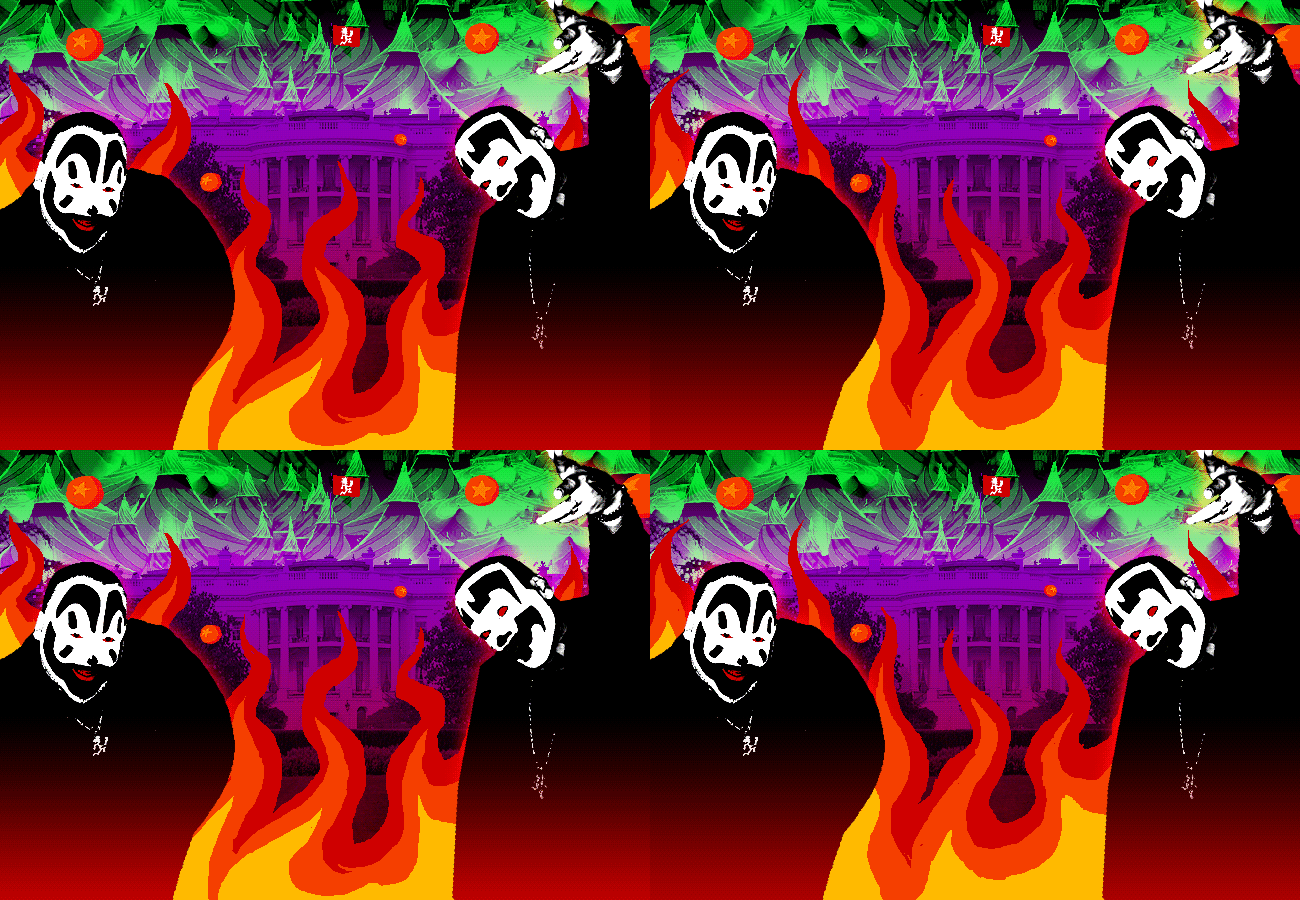
"2024. The last free election the world would ever see."
This was not a serious attempt to predict the future — one hopes, at least. And yet: when these words were written, in 2012, it was not a long bet that politics would continue to escalate in absurdity to the point that the 2024 election would seem empathetically like we were electing two murderclowns who shit on bibles and rap about how awesome genocide is. The writing was on the wall. The dam of ludicrous political nonsense was never watertight, as mockworthy political deeds have been circulated at least since the era of the single-panel newspaper cartoon, but social media cracked it conclusively. It became impossible for anything stupid to happen and go unrecognized as such. Satire now proliferates at an amazing rate, chemically accelerated by algorithmic popularity metrics; and so, politics becomes an ever more parodic reflection of itself, as political entertainment inevitably shapes political reality.
While I doubt that any of the figures who might currently be playing the role of "alien proxy juggalo president" actually read Andrew Hussie's vision of America in the 2020s, some of their hundreds of thousands of acolytes and/or detractors did, and those ideas inform their arguments; through agreement with or rejection of the satire, the alien proxy juggalo politics are, however diluted, present in the discourse that eventually evolves into legitimate political discussion. Someone, somewhere, makes a decision based on their understanding of this allegory. Someone thinks "oh my god, that guy is being evil guy fieri from homestuck right now," or, less likely, "oh my god, I'M being evil guy fieri from homestuck right now." Someone else, potentially very far down the line but nevertheless still connected, lives or dies because of that decision.
Ron Paul Funeral City, as a work of political commentary published in the past, has already begun to extend its delicate roots into reality, too. Someone with political power has surely read something written by someone who read something written by someone who knows about RPFC. The orbit is pertubed, however slightly, by its presence. The Funeral City is really happening, in that anything that does happen can be compared to it in some way — if it's possible for something to be even an infinitesimal fraction of Ron Paul's Funeral City, then it exists, scattered like cosmic dust across reality. Maybe that dust was never actually stuck together into a meteorite big enough to hit you in the head and kill you, but atomically, it comprises a definite thing. It's as real as the 79-foot-tall cube we could make if we melted all the gold on earth together.
All forms of art have a function they apply to our understanding of the world. Even those that make no shots at the future, that stick entirely to the past or present, do affect the future by mutating future people's ideas of the past. We tell stories about triumph and tragedy in order to influence the perception of what is triumphant and what is tragic, what is good and what is bad, what is right and what is wrong, and why. Nationalism is particularly salient here; the Americans who signed up to invade Iraq did so on the backs of decades of stories about how World War II was triumphant (for America) and Vietnam was tragic (for America.) Among politicians, even Ron Paul, who presented himself as being about the budget and nothing else, thought he knew what justice was — how else would he know if he got a good deal on his war?
In the 1500s, Thomas More invented the fictional island nation of "Utopia" for his book that would be colloquially named the same. The name is faux Greek, and literally means "noplace." It was also never intended to be the perfect version of human society; it was something a little absurd, something a little nonsensical, to compare and contrast against the current state of western Europe. But, over the course of 500 years, it has been adapted, commented upon, reflected against, parodized, genericized, and canonized as a single definite idea: the best world. We allow each other to interpret for ourselves what exactly that world would be like, whether it would have kings and slaves and capital punishment or not; we concede that it looks different from each angle, but the concept of a best possible society remains monolithic and golden on the horizon.
Utopia is real. The Funeral City is real, and the Orwellian surveillance state is real, and so is Betty Crocker's juggalo dictatorship, and the better version of your country that existed before foreign agitators fucked it up, and Heaven, and Hell. They have never been places you could fly to and tour around; they're definitions, which the real things you can see and hear and get shot in the head by either compose or oppose. There probably aren't for-profit health insurance companies in Utopia; there probably are AI-powered traffic cameras in Airstrip One. Humans love to sort things, so we sort ideas into societal frameworks, and then we sort those societies into good or bad, and our hands remain empty. There is no fence, but there sure is a right and a wrong side of it to be on. The goal of politics is to define it, and to keep everyone on one side or the other.
Governance has never been about practicality; no state has ever existed which only cared about moving resources around most efficiently. There is no such thing as a morally neutral governmental action — the idea is frankly paradoxical. Throughout human history, borders are drawn, laws are made, wars are waged, peace is kept, and budgets are balanced always in the service of some ideal: to make the world something we think it is not but believe it could be. We'll build the fence eventually, so we need to mark out where it'll go. If we just do the right things, if we make the right sacrifices, we can put the world in order. If the right people die. If the right documents are published. Surely there is some ritual powerful enough to interrupt the enormous self-replicating machine of human chaos — someone has the song in their mind that will lead us to a world that is Good and Fair and Stable. That world was visible on the horizon in 1989; in 1992 it seemed within arm's reach. We must be getting closer. We must be. We must.But: as history continues to accelerate, its end only gets further away. We never reach it, we never appear to cross the place it once was. The fence changes direction as soon as someone drives the first stake, and in retrospect we know that it was supposed to go that way all along; we get out our survey tools, go back to the drawing board. Our gold rings never fuse into the gigantic cube. The end will only come when we stop moving, and it is very hard to stop something with ten thousand years of acceleration behind it.
Those who strive, even for simplicity, keep the world churning; the more fervent the desire for cessation, the greater the churn. Someone like Ron Paul, who attempted to enact change through sheer political denial, was still upsetting the status quo and enabling the American superorganism to convolute itself even further. Anything that can be agreed or disagreed with, any action, any principle, makes the world irreversably more complicated.
Perhaps I'm wrong; perhaps Ron Paul is still busy journeying through the underworld, and will soon enough return with all his promises. Perhaps the world can yet be solved conclusively. But here's another possibility: no amount of sacrifice is enough. There is no price sufficient to buy a world that makes sense. Ron Paul — or any other political fantasist — can convince millions of people to die in the name of some virtue, they can build a city (a wall, a canal, a hyperbaric biosphere) that promises to finally make all the insanity stop, and yet when all is said and done we wake up in a world that has only continued to change. Nothing arrests the societal engine, and certainly nothing winds it backwards, no matter how much faith we put in politics and politicians to save us, no matter what we build in their name. We are living in the Funeral City, and Ron Paul has run away with our fucking money.
Appendix: Image Sources
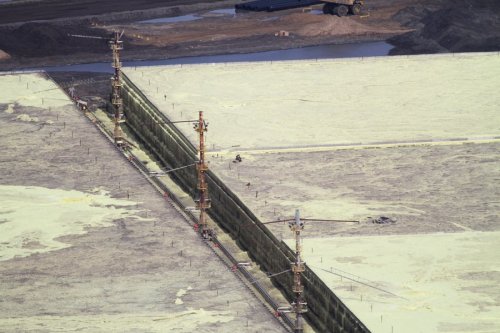
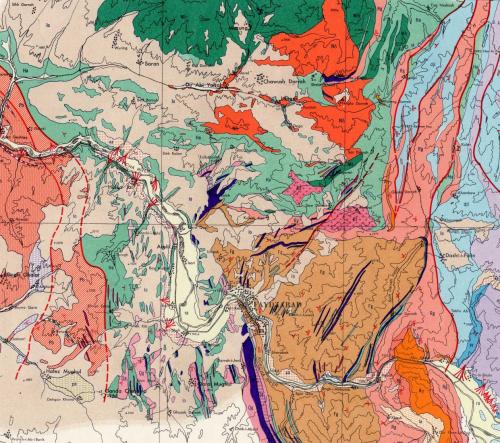
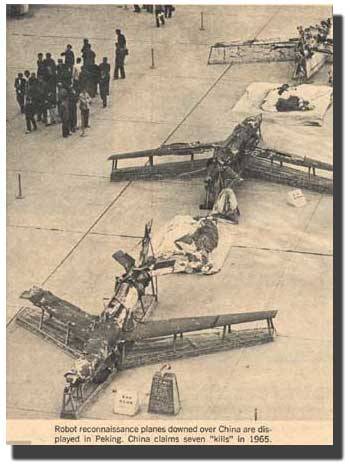
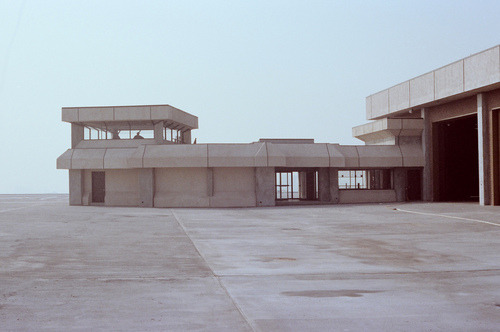
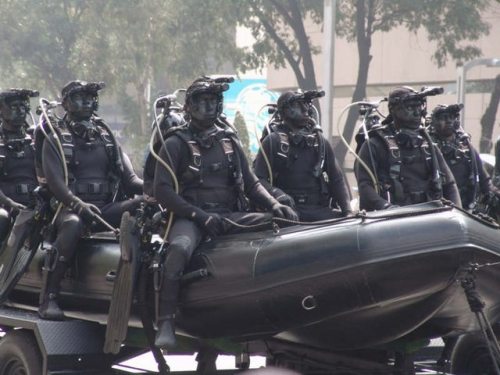
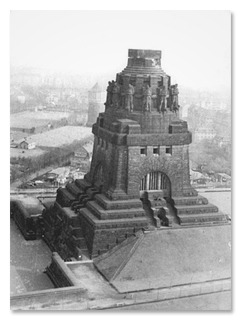
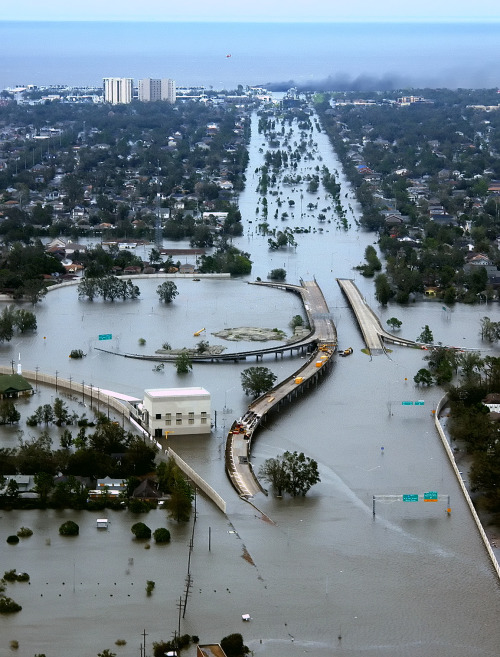
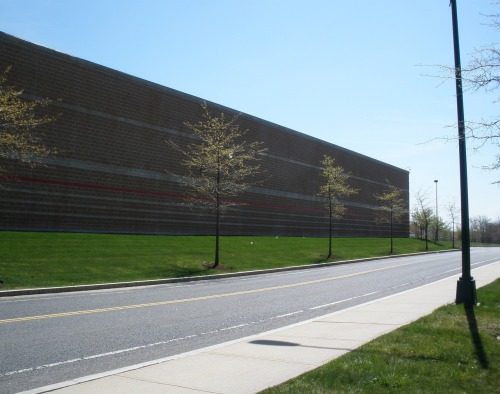
The images used in the RPFC narrative were all posted without attribution; I imagine many of them were taken from likewise-sourceless Tumblr posts. (Reposting aesthetic pics with no context is a critical part of the Tumblr ecosystem.) Out of curiosity, I have tracked down sources for as many of them as possible. Note that this table is very wide; you may have to shift-scroll to see the whole thing.





















































.jpg)


_aboard.jpg)
